
In 2024, over 60% of contractors reported supply chain issues with concerns about costs and shortages. Less than a quarter of those interviewed reported no difficulties, meaning they must be doing something different, right?
Do you want to be a part of the majority or the minority on this issue?
Perhaps a better question is, can you afford to be a part of the majority when it comes to supply chain failures?
Experiencing a supply chain disruption will at least delay a project, but the impact could be catastrophic. The missed deadlines and increased costs will impact your bottom line and reputation.
An experienced contractor can pick up the slack, adapt, and possibly make up the time and money somewhere. But, what does it cost you in the meantime? It’s more likely to create strain that could affect the quality and safety on the worksite.
The good news is that most disruptions to construction supply chains are preventable with proper planning and communication. Understanding the challenges makes it possible to address them and make your processes more adaptable to manage issues with suppliers.
Common Construction Supply Network Challenges
Construction supply chains look different from other industries because every project is different. Unlike other industries, like manufacturing, you don’t use the same components on every job. With limited opportunity to standardize, contractors need to be more adaptable.
Establishing a stable supply chain means you have somebody to call when the kitchen cabinets didn’t arrive on site and you’re already behind. It means having a plan in place when the wrong appliance or paint colors arrived on site.
You need to develop a plan that your team understand and enacts the minute things go awry so you lose as little time and money as possible.
Communication Breakdowns
Miscommunications can be costly, and they remain one of the key roadblocks to a smooth supply network.
Since construction supply chains differ from those in other industries, clear communication is necessary to avoid confusion and ensure you get the right materials for each project. There’s rarely room for miscommunications over materials because your clients want what they ordered and aren’t likely to settle for anything less.
If the bathroom sink isn’t going to make it on time, you need to be able to communicate with your supplier, your client, and your team to quickly find an adequate replacement .
Single-Source Dependencies
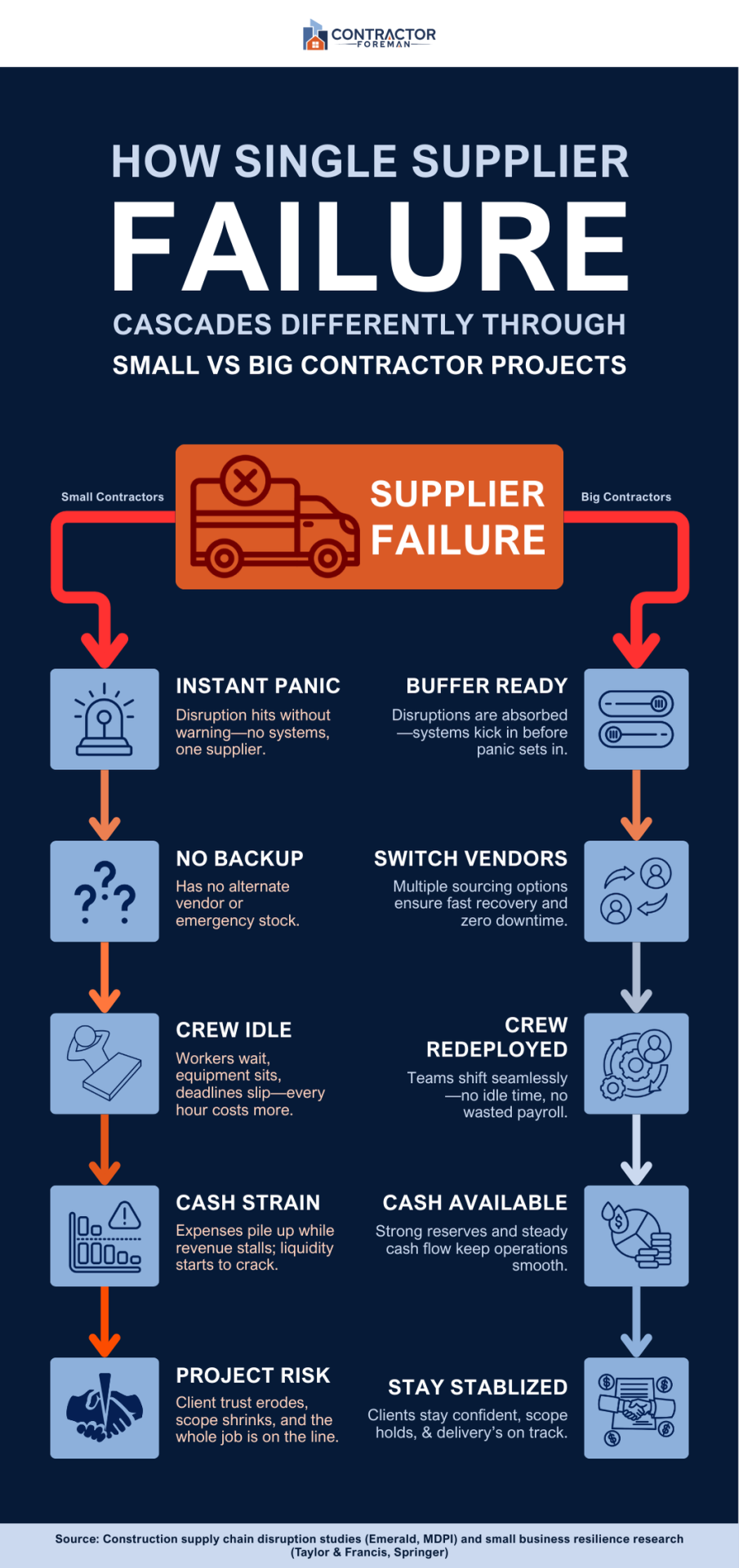
Speaking of items not arriving on time, reliance on a single supplier could leave you high and dry. While it’s nice to develop strong relationships with vendors and subcontractors,, limiting yourself to just one isn’t sustainable in the current market.
For example, what’s your plan if your window guyr has a familyemergency and can’t make the delivery on time?. Without an alternative window vendor, you have to wait it out or make a special trip to the local home improvement store. Hope they have what you need and be prepared to for the lost time and money.
Poor Supplier Relationships
Establishing connections with multiple suppliers is only the first step. It’s easy to meet people, exchange information, and work with them once or twice. It’s a completely different thing to forge actual working relationships with them.
When contractors fail to put the time and effort into building relationships with their suppliers, those connections can fade. Vendors and subs are like anybody else, meaning they will work with the people who prioritize them and respect what they have to offer.
If you can’t take the time to acknowledge a supplier, they aren’t going to prioritize you when you call looking for something specific.
Lack of Contingency Planning
Every contractor knows Plan A rarely works out. The lumber shows up late, the windows get delayed, or your sub bails last minute. If you don’t have a backup supplier or a backup plan, your crew is standing around — and that costs you money.
What would you do if the wrong appliances arrived on one site? You could run to a local store to get what you need, but that takes time and money. You also need to figure out what to do with the extra items…
Establishing contingencies isn’t a suggestion, it’s a necessity.
Inadequate Tracking
Disorganization is a contractor’s worst enemy, especially when it comes to keeping track of materials.
When you can’t oversee the flow of materials, you can’t keep track of what’s missing or delayed.
Inadequate tracking impacts every project at every step of the way because it prevents continuity and creates room for miscommunications and misappropriation.
Leveraging daily log software can give you better oversight of materials and reduce the risk of errors.
Make Your Supply Network Work For You a Resilient Construction Supply Network
Creating an adaptable supply network is a challenge if you lack the structure and tools to support your business needs.
Most supply chain failures are entirely preventable with a few simple strategies.
Focus On Systematic Coordination
Restructuring your approach to your construction supply network might seem overwhelming, but it doesn’t have to be. A little effort up front will leave you with a system that coordinates your efforts and establishes a solid foundation for growth.
Developing a structured approach can offset supply network challenges in several ways.
- Track supplier performance to determine who’s reliable and who continuously falls short.
- Gain oversight over materials, including deliveries to sites, so you know what you’re working with.
- Coordinate materials and identify contingency plans faster because you have access to real-time data.
- Manage the many moving parts (your vendors, subs, materials, and equipment) to maintain quality, make better predictions, and reduce project delays.
- Maintain communication among all project stakeholders to catch problems early and create solutions.
Systematic coordination keeps projects running seamlessly. The right approach for a contractor is structured enough to maintain consistency while allowing enough flexibility to meet the needs of each project.
Be Proactive When Building and Managing Supplier Relationships
Taking initiative with suppliers is the first step to forging strong relationships that translate to better working relations.
Be transparent during your dealings. Show people they can trust and respect you. Maintain professionalism with every interaction, especially when dealing with conflicts.
Ultimately, you need to consider the benefits of doing business with each supplier. That requires some type of performance measurement that’s easy to monitor without being arbitrary.
Keep notes on which suppliers deliver on time and which ones keep you waiting. Even better — use software that tracks this automatically so you know who you can count on before you bid the next job.
Create a Diverse Supplier Network and Establish Backups
Knowing how to establish and maintain supplier relationships is only half of the issue. Creating a balanced supply network protects against single points of failure that cripple projects.
Building a stable of backup suppliers is key to preventing a single vendor or subcontractor from destroying a project’s schedule.
Don’t put all your eggs in one basket. If your go-to supplier is out, you need a backup you can call right away. It’s the difference between keeping your project moving and losing two days waiting.
Establishing backup options for when things go south is the best way to put more money in your pocket and keep projects on time.
Technology Integration Streamlines Everything
Prevent the coordination failures that cause most supply chain breakdowns by leveraging technology.
You can handle most things manually or with a few different programs, but that takes additional coordination and time. A notebook and a few spreadsheets are easy to use and cost-effective. Wouldn’t your life be easier and more efficient if you could automate tasks and access numbers in real time?
Being able to access everything you need from one platform is a gamechanger. It’s even better when you can use the platform anytime, anywhere from your mobile device. You gain the power to make informed decisions in a timely manner.
Using the right tools makes it easier to react quickly to changes, like a subcontractor not showing up on a project. You can easily coordinate with your team and backup subs to get the job back on track. Being able to chat in real-time with your team, clients, and suppliers could be the edge you need.
3 Construction Supply Chain Pitfalls and How To Overcome Them
Understanding typical supply network challenges is one thing, but figuring out how to dig yourself out of a bind is another. It’s not always easy to make the necessary changes, but these common issues might be easier to remedy than you think.
Your Primary Supplier Experiences Difficulties
Supply chain failures cause project shutdowns when primary suppliers experience delays, quality issues, or capacity problems. It’s the biggest reason you need to shift away from single-source supplier dependencies and diversify your network.
You might have a long-standing relationship with a supplier that’s been mutually beneficial, until it’s not.
For example, a vendor can be bought out or lose their access to materials. Or your direct contact leaves the company and the replacement isn’t as committed to meeting your business needs.
The unexpected happens every day, and if you’re not prepared with backup options, you could be left high and dry.
Establishing a strong network of vendors and subcontractors is critical in crafting a resilient construction supply chain. It also allows you to develop new partnerships that could lead to new opportunities.
Make sure you research potential partners to find alternatives that fit with your business model. Finding local options can reduce your transportation costs and reduce the time it takes to get the materials.
Communication Breakdowns Create Mistakes
Half the time supply problems come down to bad communication. The wrong size door gets delivered, or nobody tells you the shingles are backordered. If you’re relying on scattered texts and calls, things will slip. Having one clear system for supplier and crew updates saves headaches.
When you don’t have open lines of communication between project teams and suppliers, you end up with the wrong materials, missed deliveries, or specification errors.
It doesn’t have to be a complete lack of communication either, unclear messaging can create a range of issues. Ensuring everyone is on the same page and working with the correct information can reduce miscommunications.
Being transparent and requesting the same level of communication from your suppliers is valuable. If your supplier isn’t being forthcoming, it is in your best interest to move on.
Additionally, you need to determine the best mode of communicating. For example, email is generally effective, but not timely, and there’s always the chance that a crucial message ends up in the spam folder.
You might consider a text chain, but that can be problematic if you have people using different devices, like a blend of iPhones and Androids. Messages can easily be lost, and you can’t control what devices other people use.
Consider choosing construction software that features a Team Chat so you can easily and efficiently coordinate communication with your supply chain. It has the added bonus of making team communications faster and more efficient.
Lack of Supplier Performance Tracking Leads to Recurring Problems
When you’re running around trying to complete a project on time, it’s easy to miss the small things.
Perhaps one of your suppliers regularly drops the ball, setting you back a few days. While it may not seem like a big deal every once in a while, when it happens on every project, it’s a problem that costs your company.
The truth is, allowing recurring problems to repeatedly disrupt projects without corrective action impacts your bottom line and your reputation.
By tracking supplier performance, you can identify trends that create inefficiencies. It may be a matter of communicating with the supplier to rectify things, but at least you have numbers to back you up. If the issues keep happening, you have the data to back your decision.
Select construction software that makes purchase order management easier while giving you better oversight regarding trends. When you can do everything from one platform, it’s easier to track data and identify trends so you can address inefficiencies.
Stable Construction Supply Chains Create Growth Potential
Having a resilient supply chain helps you consistently deliver projects on time while your competitors struggle. It’s the key to gaining an edge while building a foundation for future growth.
Taking the time to understand construction supply chain challenges can give you insight into where your business needs refinement.
Examine your existing network for holes. Do you have multiple suppliers to ensure you don’t fall prey to the single-supplier problem? Are your relationships with your suppliers on solid ground?
Consider your communication and tracking processes.
Do you have a clear path of communication that works for everyone? A team chat could go a long way to creating transparency at every stage.
Tracking supplier performance can help you identify inefficiencies and know when it’s time to expand your network to include more reliable suppliers.
You now have everything you need to do this manually. Maybe you even have some software to manage certain tasks and a crew of reliable suppliers you can trust.
However, Contractor Foreman eliminates the need for multiple platforms while providing you with the tools to establish clear communication with every part of your supply network.
Start your free trial today to see how Contractor Foreman can support your efforts to build a sustainable construction supply chain.







