
- What Procurement in Construction Really Means for Contractors
- The 4 Things That Trip Up Jobs Most
- Why You’re Always Chasing Materials and Tools
- The Everyday Frustrations You Already Know
- 7 Essential Strategies to Master Procurement in Construction
- Getting This Right Pays Off
- Turn Procurement From a Headache Into an Advantage
Nothing kills a job faster than missing the basics. Every contractor’s been there — framers standing idle because the lumber truck is late, a crew waiting on a permit sign-off that never came through, or realizing the dumpster delivery was pushed to next week.
Big construction firms have entire procurement departments to keep materials and services straight. For smaller teams, procurement usually falls on the owner, project manager, or foreman on top of all their other responsibilities. No wonder things slip; you’re only human.
The good news? You don’t need a playbook of complex strategies to keep jobs moving.
A few simple systems and tools can keep orders organized, subs paid on schedule, and receipts out of your glovebox—so you spend less time chasing problems and more time getting the job done.
What Procurement in Construction Really Means for Contractors
Procurement on a jobsite means making sure the right materials and subs show up when they’re supposed to, your project keeps moving, and it’s at a price that doesn’t eat your margin.
When it breaks down, you feel it right away. It looks like:
- Crews ready to pour concrete but waiting hours because the mixer truck is late.
- Scrambling for drywall and being forced to pay retail prices
- Realizing the roofing order was never confirmed, and the crew can’t start.
Those delays don’t just slow a project; they cut into profits and frustrate clients.
When it goes right, the job flows with the least amount of hassle.
- The dumpster is on-site before demo begins.
- Your electrician arrives on schedule with the right fixtures in hand.
- You can pull up receipts or purchase orders instantly instead of digging through your truck.
Don’t think of a procurement process as a corporate strategy—it’s just a simple way of keeping materials and subs organized so jobs move forward and nothing slips through the cracks.
Stop Wasting Time, Money, and Crew Hours
Big firms talk about procurement in terms of “control” and “consolidation.” For smaller contractors, it’s more straightforward: you want jobs to move faster, waste less money, and keep the crew working instead of waiting.
That means:
- Save Time: Keep track of what’s been ordered and when it’s arriving, so you’re not chasing down suppliers or making emergency runs.
- Cut Waste: Order the right amount the first time—no paying extra for rush orders or ending up with piles of unused material.
- Keep Crews Working: Nothing kills a day faster than waiting on a late delivery. When materials and subs show up on schedule, your team stays productive and the client sees steady progress.
Simple tools like a shared digital log or an app that reminds you when deliveries are due does the heavy lifting. Instead of reacting to problems, you stay ahead of them and wrap jobs on schedule, without the extra stress.
The 4 Things That Trip Up Jobs Most
When you’re running jobs, the same headaches keep showing up: late deliveries, missing gear, or subs who don’t know the schedule.
Here are the four areas where things usually go sideways and where tightening up your system makes all the difference.
1. Materials
Concrete, shingles, siding, flooring — the backbone of the project. If they’re late or short, the entire schedule slides. To save money, bulk discounts often require early orders, and once that deadline passes, so does the deal.
Good procurement means knowing exactly what’s needed, when it’s needed, and double-checking nothing falls through the cracks.
2. Tools & Equipment
Scaffolding, saws, generators, rental machinery — missing gear can sideline a whole crew. Even if your subs are on time, they can’t work if the site isn’t ready.
Tracking what you already own, what’s out on rental, and what’s due for replacement avoids wasted trips and idle time.
3. Overhead Stuff
Not glamorous, but essential: porta-potties, permits, site lighting, dumpsters. Forgetting these cuts into profit and slows projects down just like missing materials. A checklist keeps them from becoming costly afterthoughts.
4. Subs
Your subs are the final piece, whether it’s HVAC, painters, or masons.
Procurement for subs means clear agreements, confirmed schedules, and documented payments — so no one shows up late, confused, or short on materials.
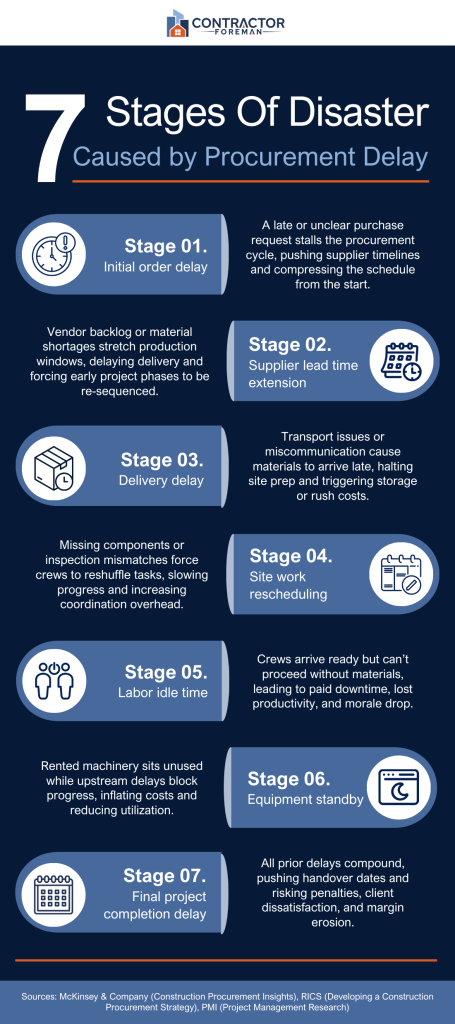
Why You’re Always Chasing Materials and Tools
Big firms can afford entire procurement teams. Someone there is paid just to track down quotes, place orders, and smooth-talk suppliers.
Small contractors don’t get that luxury — it’s usually just you (and maybe one trusted partner) doing all of it on top of managing multiple projects. That’s when the problems start stacking up:
Wearing Too Many Hats
One minute you’re managing subs, the next you’re talking to the homeowner, and then you’re trying to remember if you actually ordered the LVLs or just thought about ordering them.
Track every order in one place and see who’s responsible, so nothing gets forgotten.
Disorganized Communication
A vendor quote buried in an old email, an invoice link attached to a text, a handwritten note jammed in your truck’s cupholder — nothing’s in one place, so things slip through.
You and your crew should know exactly what’s ordered and who’s following up.
Getting Sidelined By Suppliers
Bigger accounts get priority. If your order isn’t the one paying their bill, you might wait days for a callback.
Store supplier pricing and specs together, so you can decide which lumber yard gets your business and avoid last-minute price surprises.
Curveballs Mid-Job
Inspectors add requirements, clients change finishes, or a sub shows up short on material. Suddenly, you’re racing to fix an order that was fine yesterday.
Each little slip adds up: a day here, a rescheduled crew there, another “we’ll need to push that back” conversation with the client. But with the right tools, these common headaches can be spotted, tracked, and solved before they spiral out of control.
The Everyday Frustrations You Already Know
You may already have a system. For many contractors, procurement means half-filled spreadsheets, scraps of paper, or just memory.
But those “good enough” methods don’t stop the usual headaches. Even with a solid crew, things slip — and suddenly your whole schedule is off.
Everyday frustrations include:
- Deliveries that vanish into thin air: You thought the concrete truck was scheduled, but it’s still across town, and now your crew is standing around. A spreadsheet won’t warn you when delivery dates overlap or materials run short.
- Last-minute scrambles for rentals: That scissor lift or compactor you assumed was reserved? Gone. Renting on the fly burns time and budget.
- Vendors talking past each other: With multiple suppliers in the mix, one missed email can mean duplicate orders or missing parts. Purchase Orders keep everyone on the same page.
- Guesswork bids: If receipts are crumpled in your glovebox, your job costing is off. A project that looks profitable on paper might barely break even in reality.
Even small misses add up: the wrong size window showing up, an insurance certificate overlooked, or a forgotten dumpster pickup. These little slips frustrate crews, upset clients, and chip away at profit.
A simple system makes it easier to spot and fix problems early — and if you want to see it in action, Contractor Foreman offers a free demo.
7 Essential Strategies to Master Procurement in Construction
Now that you understand the types of procurement and why manual tracking fails, it’s time to focus on actionable steps. Implementing these strategies helps small contractors regain control, reduce costs, and prevent project delays—without needing a full procurement department.
1. Keep All Your Orders in One Place
Scrambling between texts for vendor contacts, emailed invoices, and crumpled receipts is a recipe for mistakes. Keeping everything centralized ensures you always know what’s been ordered, what’s coming, and who’s responsible.
- Track orders and deliveries in a single system so nothing slips through. No one needs to know your special filing system in your glovebox to check a delivery time.
- Assign one person on-site (foreman or lead) to keep logs up to date.
- Use purchase orders to document every agreement with vendors — it saves time chasing confirmations.
2. Stick With Reliable Suppliers
Having a go-to list of trusted vendors cuts down mistakes and stress. When you know who delivers on time and at a fair price, it’s easier to plan the week and avoid scrambling at the last minute.
- Keep a list of your preferred suppliers for common materials.
- Mark which ones are backup-ready for high-demand items like rebar or shingles.
- Include the vendor’s expectations so you pay on time and they deliver when you need it.
3. Know What’s Ordered and What’s Missing
Nothing kills productivity faster than crews waiting around because someone assumed something was delivered. Track it all in real time.
- Make sure subs have what they need when they need it.
- Snap photos of bulk shipments or high-value items like ready-mix tickets, fixture pallets, or custom window deliveries to confirm quantities.
- Simple checklists on site help everyone stay on the same page and reduce (or eliminate!) “did anyone order this?” moments.
4. Order the Right Amount Every Time
Guessing quantities leads to wasted material or emergency trips. Try basing orders on past jobs and real usage to save money and avoid delays.
- Look back at similar projects to see how much material is actually used.
- Build in a small buffer for high-risk or custom items.
- Adjust orders as the project changes because it’s cheaper than pulling someone away for a last-minute run.
5. Keep Subs on Track
Your subs are part of procurement, too. Making sure your plumber or electrician shows up when scheduled and understands their scope keeps the project flowing and strengthens working relationships.
- Track agreements, schedules, and responsibilities.
- Check off milestones so you know when work is completed.
- Keep all communication documented to reduce “I thought you said…” moments on both sides.
6. Snap a Photo, Save a Receipt
You may know a client switched fixtures, but that doesn’t help the foreman who just did a will-call pickup. Keeping records of orders, deliveries, and changes today stops problems before they happen on tomorrow’s shift.
- Take pictures of every shipment, invoice, or change order.
- Log approvals and confirmations so everyone on-site is aligned.
- Linking everything to the project in one system saves hours of digging later.
7. Reminders Take Some of the Pressure Off
It’s easy to forget follow-ups in the middle of a busy week. Set reminders so you don’t forget to reorder plywood, fasteners, or sealant or follow up with your supplier. Even simple alerts prevent avoidable delays.
- Set automatic reorder points for frequently used materials.
- Get notifications for overdue deliveries or unconfirmed orders.
- Use reporting to spot patterns and prevent repeated headaches on future jobs.
With these seven habits, your team can stay organized, cut down on last-minute big-box runs, and avoid burning daylight waiting on a no-show delivery.
Contractor Foreman makes it easy to put these strategies into action, and real crews use it to save time and cut stress.
Getting This Right Pays Off
When your orders, tools, and subs are tracked and organized, the payoff is huge. Small contractors often notice benefits from better procurement almost immediately, even on crews that are already doing well.
- Fewer emergency runs: When materials are logged and tracked, you can avoid last-minute Home Depot runs.
- Crews stay busy: Knowing what’s on site and what’s arriving keeps the team working and subs appropriately scheduled.
- Smarter bids and job costing: Logging purchases and keeping records helps you see the real cost of each job.
- Better supplier relationships: Vendors appreciate clear, consistent orders and documented agreements — and that often means faster deliveries and better pricing.
- Less stress for everyone: Project managers, foremen, and owners all gain confidence knowing the system helps catch issues before they become problems.
Turn Procurement From a Headache Into an Advantage
You can run multiple jobs, keep your crews busy, and avoid costly mistakes with good procurement.
Contractor Foreman helps you do this without adding more work — track orders, manage subs, log deliveries, and keep everything visible from your phone or tablet. If you want to see it in action, try it free for 30 days and see how crews use it to save time, cut stress, and keep jobs moving.







