
BASE Painters: Scaling High-Access Specialty Contracting
Base Painters
BASE Painters: Scaling High-Access Specialty Contracting
How Contractor Foreman Became the Operational Backbone for a Multi-State Coatings Contractor


Company Profile
BASE Painters (The Base Group, Inc.) is a Colorado-based specialty commercial coatings contractor with over 15 years in operation. Founded in 2007 by Rich Purnell and headquartered in Arvada, CO, the company has evolved from a small local contractor into a multi-state specialty firm recognized for tackling some of the most complex, high-access environments in the industry.
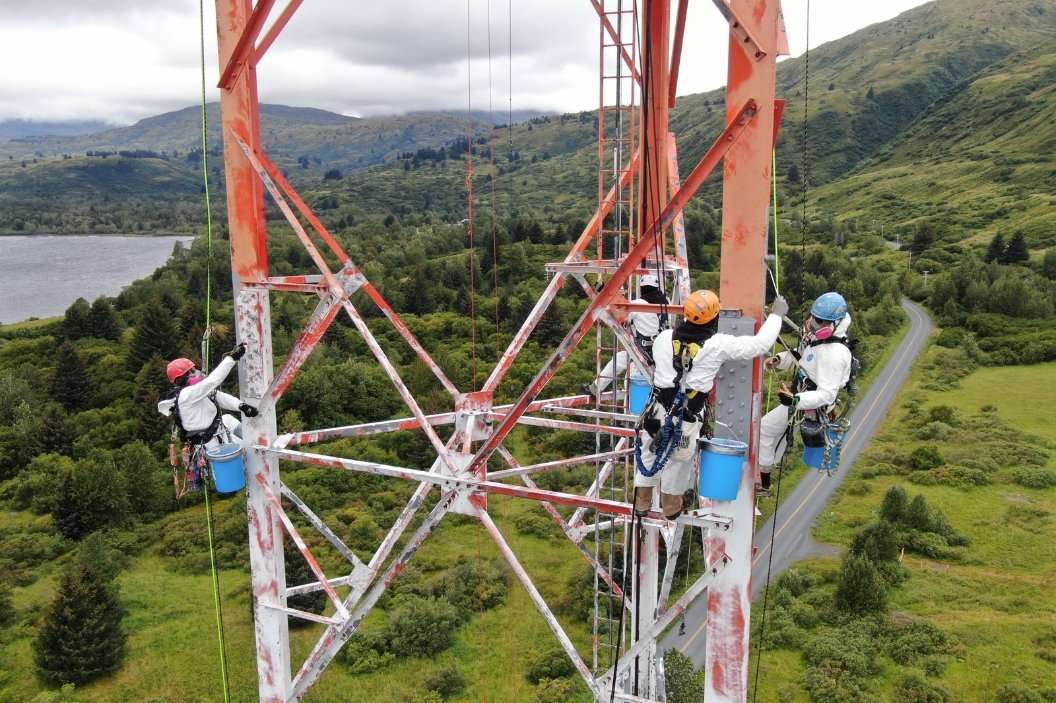
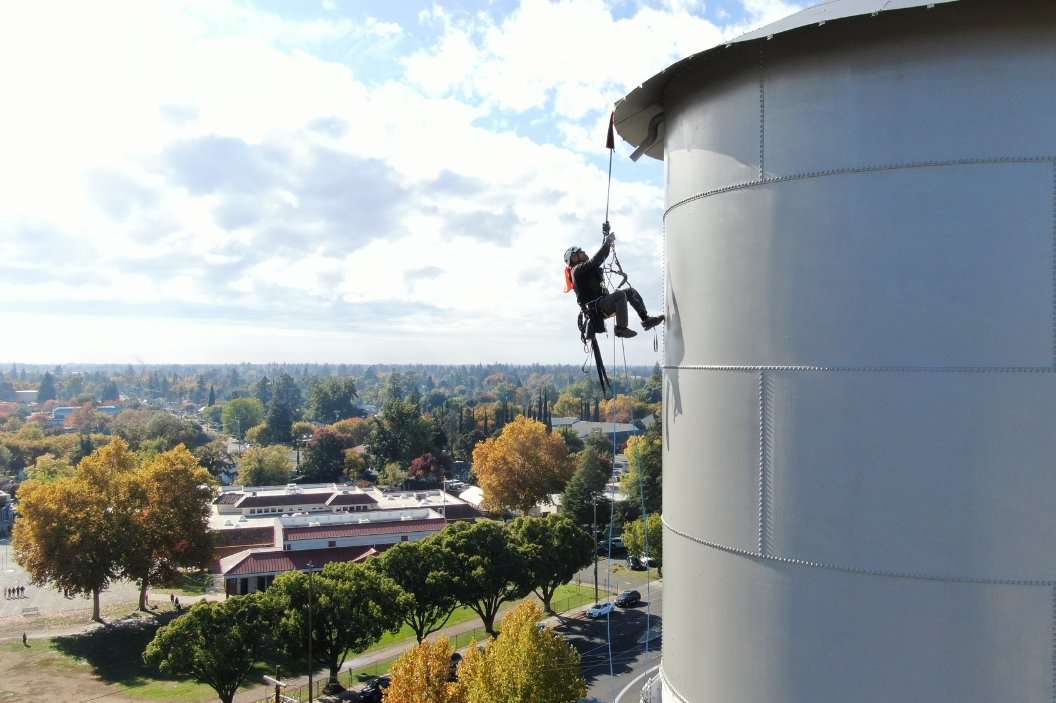
Their core specialty, rope access painting and coatings, sets them apart in a crowded market. BASE Painters operates on stadiums, structural steel, towers, tanks, and select state and federal projects, deploying technicians who work safely at elevation while maintaining tight project timelines. The firm operates as both a prime contractor (when directly engaged by owners) and as a specialty subcontractor on larger commercial and federal projects, depending on project structure.
Background & Challenge
Growth is rarely pain-free for specialty contractors. As BASE Painters expanded its footprint into multi-state projects and took on increasingly complex rope access work, the limitations of its manual systems became impossible to ignore.
The company was operating across multiple crews simultaneously, often at different elevations and across state lines, with documentation scattered across personal devices, email inboxes, and spreadsheets. Payroll reconciliation required significant manual effort, and the owner was pulled into day-to-day administrative oversight that should have been handled at the operational level.
The stakes in high-hazard environments make documentation accuracy and labor tracking non-negotiable. Their previous systems created friction at exactly the wrong moment.
Key challenges included:
- Fragmented quote forms and inconsistent estimating
- Manual payroll reconciliation across multiple crews and states
- Limited real-time visibility into multi-crew operations
- Scattered documentation across devices and emails
- Heavy owner involvement in day-to-day administrative oversight
“In high-hazard rope access environments, documentation accuracy and labor tracking are critical. Our previous manual systems created unnecessary friction.”
Objectives
The driving motivation behind BASE Painters’ search for a software solution was straightforward: scalability. The company needed a centralized system capable of growing with them, one that could handle the complexity of multi-state, multi-crew operations without creating new administrative burdens.
Specific objectives included:
- Standardize field reporting across all active projects
- Improve labor tracking accuracy to support payroll and cost controls
- Increase transparency across multiple simultaneous projects
- Reduce administrative bottlenecks that consumed owner and office time
- Support company growth without introducing operational chaos
“The primary motivation was scalability. We needed a centralized system that would standardize field reporting, improve labor tracking accuracy, increase transparency across multiple active projects, reduce administrative bottlenecks, and support growth without increasing operational chaos.”
Solution
After evaluating multiple platforms, BASE Painters selected Contractor Foreman for its balance of field usability and depth of administrative functionality, a combination that proved critical for a company where site leads and office administrators needed to work in the same system simultaneously.
Rather than deploying the software on a single project, BASE Painters integrated Contractor Foreman as a standard operating system across all active projects. This decision reflected the scale and complexity of their operations: large commercial environments such as stadium work, structural steel coating, and multi-week rope access projects operating across state lines all flow through the platform.
The platform supports their full operational cycle, including:
- Quotes and billing
- Daily logs and photo documentation
- Centralized document management
- Budget and cost visibility
- Labor and payroll reconciliation
- Access to project files and folders
- Automatic weather data integration
“We evaluated multiple platforms and selected Contractor Foreman for its balance of field usability and depth of administrative functionality.”
The fit was deliberate. For a contractor operating in high-elevation, high-risk environments, the ability for site leads to log activity, upload documentation, and track hours in real time from wherever they are on a structure was not a nice-to-have. It was a requirement.
“For our company, Contractor Foreman serves as an operational backbone rather than being limited to a single job.”
Implementation
BASE Painters describes the implementation process as straightforward. Field leaders were quick to adopt the two features that mattered most in day-to-day operations: time tracking and daily logs via the mobile app.
The most meaningful outcome of implementation was not a specific feature, but a shift in how information flows through the organization. The company moved away from relying on memory, text messages, and spreadsheets, replacing those ad-hoc systems with structured documentation and centralized oversight.
“Implementation was straightforward. Field leaders quickly adopted time tracking and daily logs via the mobile app. The most significant impact was creating consistency in how information flows from field operations to the office.”
This transition to structured information flow was particularly important in rope access environments, where crews may be working across different elevations or zones on the same project. Real-time reporting improved coordination and accountability in situations where traditional communication methods were unreliable or impractical.
Results & Impact
Operational Improvements
Since implementing Contractor Foreman, BASE Painters has seen measurable improvements across the areas that mattered most when they set out to find a solution:
- Significant reduction in payroll processing time
- Improved labor cost visibility across all active projects
- Faster administrative reconciliation
- Reduced communication errors between field teams and the office
- Improved project documentation consistency
Strategic Shift: From Reactive to Proactive
Beyond the operational metrics, perhaps the most meaningful outcome has been a shift in management posture. BASE Painters moved from reactive management chasing information and following up manually, to proactive oversight, with the system surfacing the data leaders needed before problems compounded.
This structural change also allowed the company to reduce direct owner involvement in day-to-day administration, freeing leadership to focus on growth and strategy rather than operational firefighting.
“Operationally, the biggest shift has been moving from reactive management to proactive oversight. The system has allowed us to reduce direct owner micromanagement and build a more structured operational model.”
A Day in the Field: Rope Access in Action
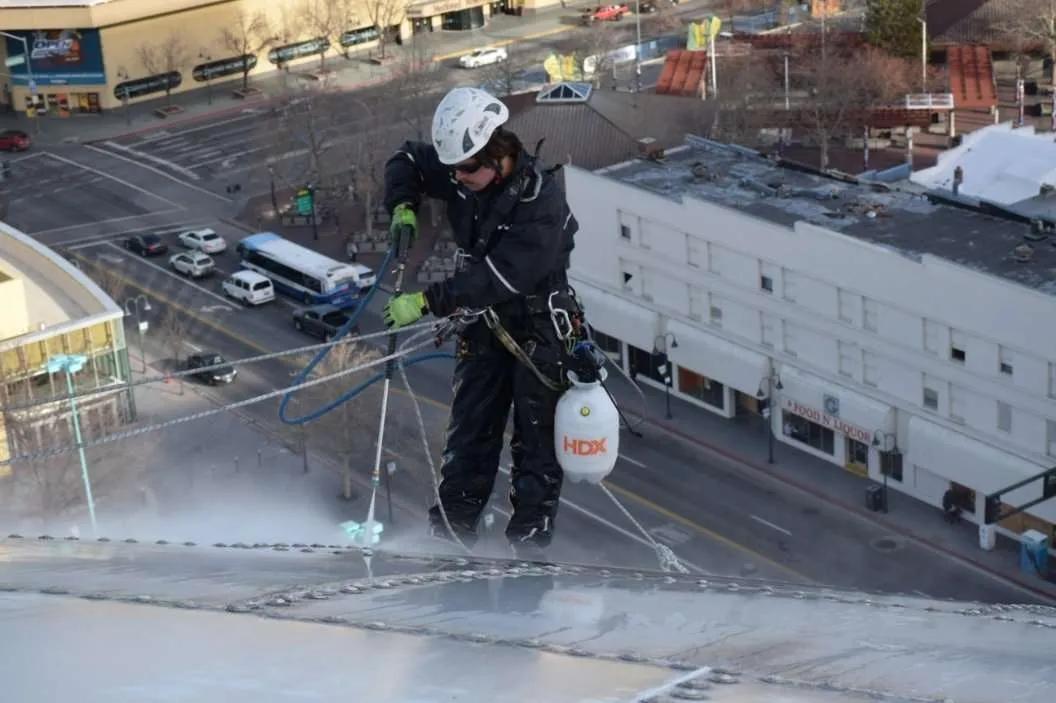
The real-world impact is perhaps best illustrated by the change in how BASE Painters manages its flagship rope access projects, large stadium and structural steel engagements involving multiple technicians working at elevation simultaneously.
“On large stadium and structural steel projects involving multiple rope access technicians, daily coordination and documentation are essential. Previously, compiling field data required manual follow-up and reconciliation. Now, site leads log activity, upload documentation such as before-and-after and during photos, and track hours directly in the system in real time. This improves transparency, reduces administrative lag, and supports safer, more accountable operations. For a contractor operating in high-elevation and high-risk environments, that level of structure is critical.”
Conclusion
BASE Painters’ story is a model for how specialty contractors can use the right software platform to move from survival mode to scalable growth. By replacing fragmented, manual processes with Contractor Foreman’s centralized platform, they transformed their operations, bringing consistency, visibility, and accountability to an environment where the margin for error is measured in both dollars and safety.
Their implementation underscores an important insight: the most impactful outcome of the right software isn’t any single feature. It’s the cultural and operational shift from reactive management to structured, proactive oversight.
As BASE Painters continues to expand across state lines and potentially internationally, the foundation they’ve built on Contractor Foreman positions them to scale with confidence.
“As we continue to scale across state lines and, potentially, international borders, and increase project complexity, centralized operational visibility has become essential. Contractor Foreman has supported our transition toward a systems-driven specialty contracting model, reducing reliance on manual processes and improving operational discipline.”

Start a Free Trial
We have plans starting at $49/month

Have a question? See our Frequently Asked Questions or give us a call (828) 375-8042 or click Live Chat.






