
How a 22-Year Commercial Subcontractor Gained Real-Time Financial Control and Cross-Project Visibility with Contractor Foreman
Effix Interior Systems
How a 22-Year Commercial Subcontractor Gained Real-Time Financial Control and Cross-Project Visibility with Contractor Foreman

Company Profile
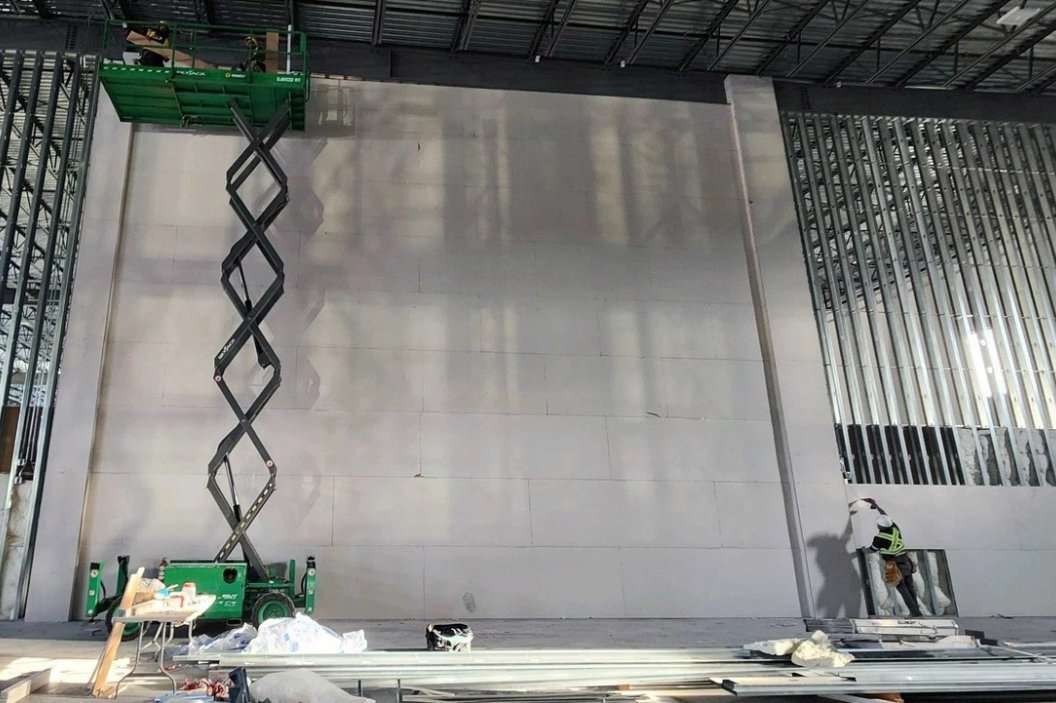
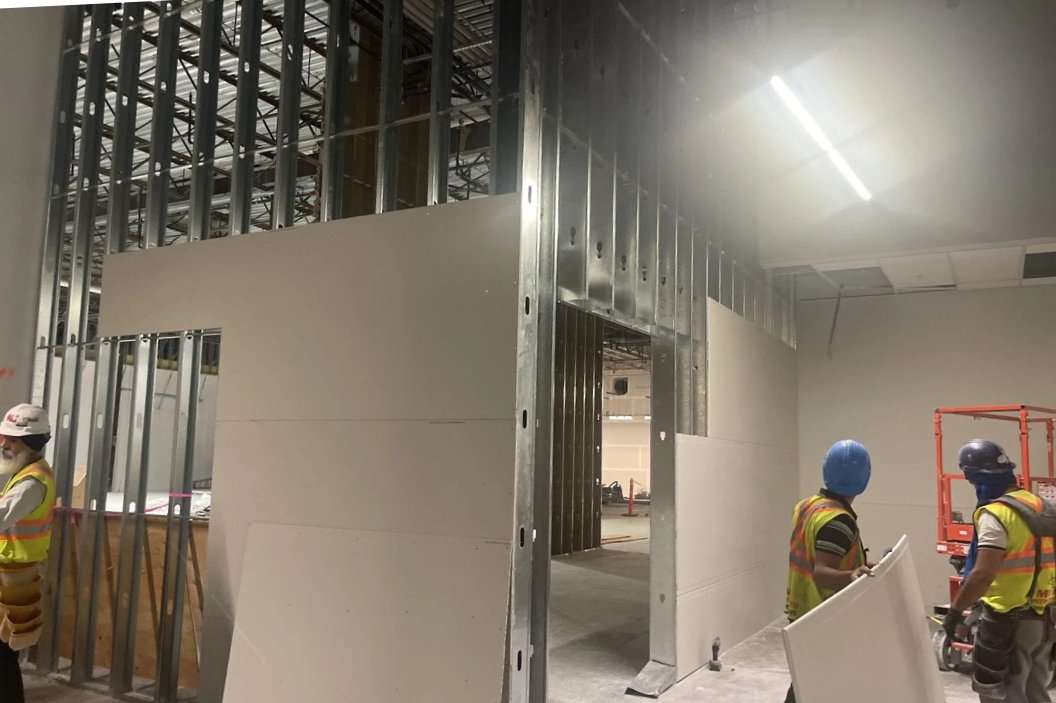
Effix Interior Systems Ltd. is a well-established commercial interior systems subcontractor based in Abbotsford, British Columbia, Canada. With 22 years of experience in the construction industry, the company has built a strong reputation specializing in steel stud framing, drywall, and interior wall and ceiling assemblies.
Operating primarily in the commercial sector, the company serves institutional, healthcare, educational, and commercial building projects throughout the region. As a mid-sized subcontracting operation, it manages multiple concurrent projects, requiring tight coordination between estimating, project management, field operations, and accounting teams.
Their success depends on maintaining operational consistency, financial control, and seamless communication across all projects and stakeholders.
Background and Challenge
Like many growing construction companies, Effix Interior Systems reached a critical inflection point at which its legacy systems and processes could no longer effectively support its expanding operations. The company’s operational infrastructure had evolved organically over the years, resulting in a fragmented technology ecosystem that created significant inefficiencies.
As their Senior Estimator/VP of Operations explained:
“Before implementing Contractor Foreman, many of our processes were fragmented across spreadsheets, email, shared drives, and manual tracking.”
This fragmentation created multiple operational challenges that increasingly threatened the company’s ability to maintain the quality and financial discipline that had defined its success:
Visibility and Control Issues
The company struggled to maintain consistent visibility across multiple projects because information was scattered across various systems and platforms. This lack of centralized oversight made it difficult for management to obtain a comprehensive view of the company’s overall performance.
Financial Tracking Complications
One of the most critical challenges was tracking job costs and budgets in real time. Without real-time financial visibility, the company risked cost overruns and reduced profitability on projects.
Document Management Chaos
Centralizing documents, RFIs, drawings, and change orders proved increasingly difficult as project volume grew. Critical project information was scattered across email threads, shared drives, and individual computers, creating version-control issues and communication bottlenecks.
Coordination Inefficiencies
The team faced ongoing difficulties coordinating schedules and field communication efficiently, leading to delays, miscommunications, and duplicated efforts.
The cumulative impact of these challenges became more acute as the company’s success led to increased project volume:
“As project volume increased, it became more difficult to maintain tight financial control and operational consistency using disconnected tools.”
This growing pain threatened the very strengths that had allowed Effix Interior Systems to thrive over two decades in a competitive market.
Objectives
Recognizing that their operational challenges stemmed from fundamental infrastructure limitations rather than execution issues, Effix Interior Systems set clear objectives for transformation.
Primary Goal: System Integration
The company’s leadership articulated its core objective clearly:
“We were motivated by the need for a single, integrated platform that could combine project management, scheduling, and financial tracking.”
Operational Objectives
Beyond system integration, the company identified specific operational goals:
- Enhanced Visibility: Establish comprehensive, real-time visibility across all projects and operations
- Administrative Efficiency: Improve visibility and reduce manual administration by eliminating redundant data entry and reconciliation between disconnected systems
- Financial Control: Gain better real-time control over project performance and job costing to protect profitability and enable proactive decision-making
- Scalability: Create an infrastructure capable of supporting continued growth without sacrificing operational consistency or financial discipline
The company sought a solution that would be robust enough for commercial subcontracting but still flexible and cost-effective for a mid-sized operation, recognizing the need to balance sophisticated capabilities with practical usability and value.
Solution
After evaluating various construction management platforms, Effix selected Contractor Foreman as its integrated operations platform. The decision reflected careful consideration of both immediate needs and long-term strategic requirements.
Discovery and Selection
The company discovered its solution while researching available platforms:
“We came across Contractor Foreman while evaluating construction management platforms that were robust enough for commercial subcontracting but still flexible and cost-effective for a mid-sized operation.”
Comprehensive Implementation Approach
Rather than implementing Contractor Foreman for a single project or department, the company took a holistic approach:
“We use Contractor Foreman across our entire operation rather than for a single project. It supports estimating, project management, scheduling, document control, job costing, and financial tracking across multiple concurrent commercial projects. It functions as a central system for both office and field coordination.”
Core Features Deployed
The company leveraged several critical Contractor Foreman capabilities:
- Project and task scheduling
- Document management and drawing control
- Job costing and budget tracking
- Change order management
- Office-field collaboration
Strategic Positioning
The platform became foundational to operations:
“Contractor Foreman has become a core system in our workflow and is now central to how we manage projects and monitor financial performance.”
Long-term Value Recognition
Importantly, the company highlighted an often-overlooked aspect of their solution choice:
“We have also been very pleased with the platform’s ongoing development and the consistency of product improvements and feature enhancements over time, which has added increasing value as our usage has matured.”
This emphasis on continuous improvement demonstrated that the company wasn’t just solving immediate problems but investing in a platform partner committed to long-term evolution.
Implementation
The implementation process proved to be one of the project’s success factors, demonstrating that powerful enterprise-grade capabilities need not require enterprise-level complexity.
Streamlined Onboarding
“The onboarding and implementation process was straightforward and intuitive. The platform was easy to configure for our workflows, and the training requirements were reasonable.”
User Experience and Adoption
A critical factor in successful software implementation is user adoption, which often fails when systems are overly complex or unintuitive. Effix found that Contractor Foreman avoided this common pitfall:
“The interface is practical and user-friendly, which helped with adoption across the office and project management team without requiring extensive formal training.”
User Base and Reception
The platform was deployed across multiple roles and departments:
“Primary users include project managers, estimators, accounting staff, and site supervisors. Overall, the experience has been very positive. The system is stable, logical, and provides a strong operational overview that supports both day-to-day execution and higher-level management decisions.”
Implementation Success Factors
The implementation’s success stemmed from several key elements:
- Intuitive Design: The platform’s user-friendly interface reduced the learning curve
- Flexible Configuration: Easy adaptation to existing workflows minimized disruption
- Practical Training: Reasonable training requirements facilitated quick adoption
- System Stability: Reliable performance built user confidence from day one
- Logical Structure: A well-designed information architecture made sense to users
This smooth implementation allowed the company to begin realizing benefits quickly, rather than enduring the extended transition period that often characterizes major system changes.
Results and Impact
The implementation of Contractor Foreman delivered significant improvements across operational, financial, and strategic dimensions. The impact was both immediate and ongoing, with benefits compounding as usage matured.
Operational Improvements
Since implementing the platform, the company experienced major improvements in several key areas:
Centralized Visibility: Unprecedented oversight gave management and project teams better resource allocation capabilities and proactive issue identification
Information Access: Faster access to documents and current drawings eliminated time wasted searching for information and reduced errors from working with outdated documentation
Cross-functional Coordination: Improved coordination between estimating, project management, and accounting broke down information silos and enabled seamless handoffs between project phases
Real-time Intelligence: Better real-time insight into job performance and cost trends transformed management from reactive to proactive
Efficiency Gains
The centralization delivered tangible productivity benefits:
“It significantly reduced duplication of work and manual reconciliation between systems.”
Financial Impact
“Contractor Foreman has helped improve budget accuracy, reduce administrative overhead, and improve financial visibility across projects.”
The company achieved:
- Stronger job costing control with granular tracking of project expenses
- Faster reporting cycles enabling quicker decision-making
- Earlier detection of potential budget or productivity issues preventing costly overruns
As the company noted:
“While exact metrics vary by project, the improvement in visibility and control has had a clear positive impact on both profitability and operational efficiency.”
Real-World Application
The company provided a concrete example of the platform’s value:
“On several projects, having real-time access to budgets, change orders, and production tracking allowed us to identify cost drift early and correct course before it became a larger financial issue.”
This early warning capability delivered measurable value:
“Compared to our previous manual processes, this has significantly reduced surprises at project close-out and improved forecasting accuracy.”
Strategic Value
Beyond operational metrics, the platform delivered strategic benefits by:
- Supporting Growth: Creating scalable infrastructure to handle increasing project volume
- Enabling Better Decisions: Providing management with reliable data for strategic planning
- Reducing Risk: Earlier identification of issues before they impact profitability
- Improving Competitiveness: Greater efficiency and accuracy in estimating and project delivery
Ongoing Value Recognition
Importantly, the company emphasized that value continues to grow:
“We have been very satisfied not only with the current functionality, but also with the pace and direction of Contractor Foreman’s ongoing development. The platform continues to improve in meaningful ways, and it’s clear the product team actively invests in refining features and responding to user needs.”
Conclusion
The Effix Interior Systems case study demonstrates how the right technology platform can transform operations for mid-sized construction subcontractors. After 22 years of successful operation, the company recognized that continued growth required modernizing their operational infrastructure.
Looking Forward
Effix Interior Systems continues to see value in the platform’s evolution, noting opportunities for continued enhancement of reporting, dashboards, and advanced analytics along with deeper customization options for subcontractor-specific workflows and productivity tracking.
This case study illustrates that digital transformation success in construction doesn’t require abandoning proven processes or enduring painful implementations. With the right platform partner, mid-sized contractors can achieve enterprise-grade operational control while maintaining the agility and efficiency that made them successful.
For Effix, Contractor Foreman has evolved from a software solution into a strategic infrastructure asset that enables both current excellence and future growth.
Start a Free Trial
We have plans starting at $49/month

Have a question? See our Frequently Asked Questions or give us a call (828) 375-8042 or click Live Chat.






